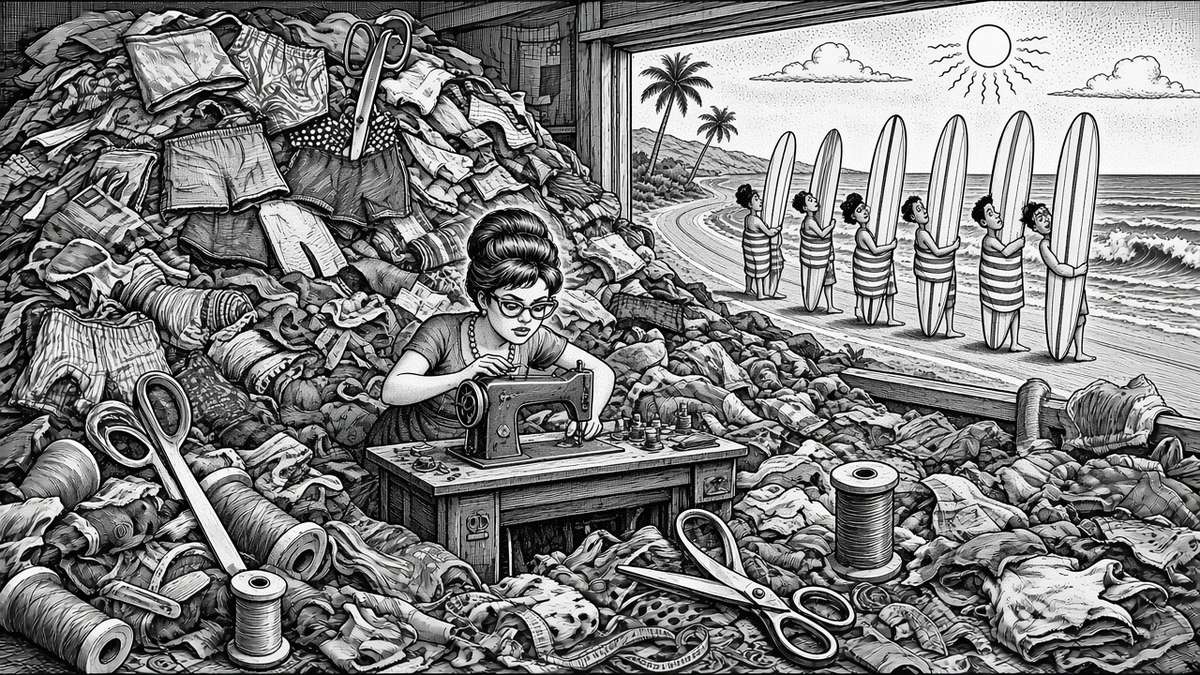
In the late 1950s the hottest surf gear in California came out of a shop that made covers for boats. A kid from across Pacific Coast Highway walked in with a problem: his cutoff jeans kept falling apart in the surf. The boat-cover guy had a sewing machine and a pile of canvas. Surf trunks were never the same again.

The facts, no starch on top
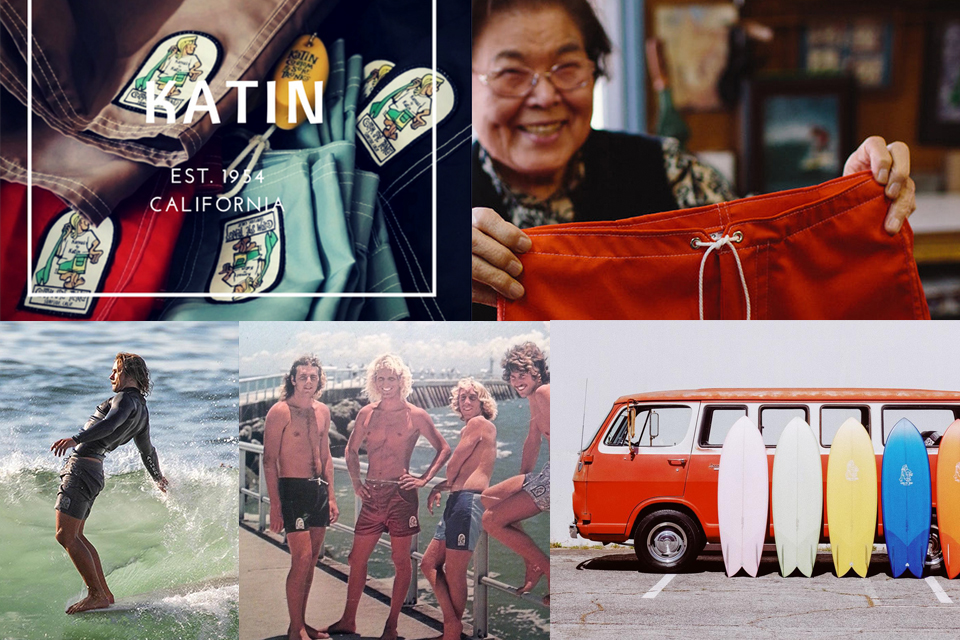
- Boat covers first. Walter and Nancy Katin opened a canvas boat-cover business in Surfside, California, on the coast between Seal Beach and Huntington Beach. The brand dates it to 1954; at least one surf reference says the store opened in 1956.
- The Captain and the saleswoman. Walter, nicknamed “the Captain,” did the sewing. Nancy, by the brand’s telling under five feet tall, ran sales.
- Built like a tarp. According to the brand, the covers used hundred-pound-test waxed-nylon thread and nickel grommets. Locals noticed.
- The first trunks, 1958 or 1959. Sources split on the year. Most credit local teen Corky Carroll, who grew up across PCH in Surfside Colony, with asking Walter for a pair of surf trunks.
- Why canvas? Swimsuits of the day didn’t last in salt water, and denim cutoffs shredded. Boat canvas was close to indestructible. The early trunks were also heavy when wet, took hours to dry and could give you a rash where you least wanted one.
- Boat hardware on your hips. Early trunks closed with the same heavy-duty snaps used on boat covers. One lace-up model had 11 eyelets.
- Lifetime guarantee on seams. If a seam blew out, the shop fixed it, for life.
- The trunks took over. Demand grew so fast that, by Carroll’s account, the Katins more or less gave up the boat-cover business.
- Sato Hughes joins. Sato Hughes, a Japanese-born seamstress the Katins met through a dry cleaner, was sewing their trunks by 1961, per the brand. Her start date varies by source.
- Walter dies, Nancy carries on. Walter died in 1967. Nancy kept the business going, sponsored surfers such as Corky Carroll and David Nuuhiwa to wear the trunks, and gave out surfing scholarships.
- First Lady of Surfing. Nancy kept a couch in the shop for surfers to hang out on. She was named the Huntington Beach Surfing Walk of Fame’s Woman of the Year in 2000, after her death.
- Famous legs. The brand lists Gerry Lopez, Midget Farrelly, Mark Richards, Rabbit Bartholomew, Shaun Tomson and Eddie Aikau among the surfers who wore Katin trunks.
- Nancy dies, Sato inherits. Nancy died in 1986 of complications from emphysema. She left the business, and the quarter-acre lot it sits on, to Sato.
- Glenn Hughes steps in. Sato’s son Glenn, then a truck driver, took over the front of the shop. According to a 1994 LA Times story, he had the books back in the black within a year.
The Katin: Huntington’s team contest
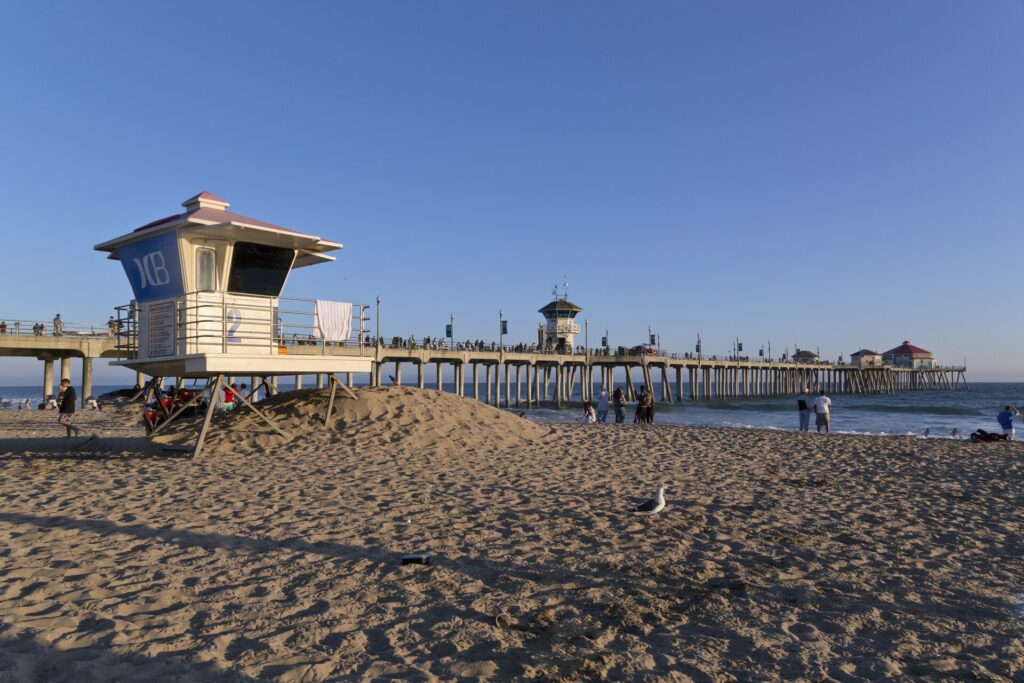
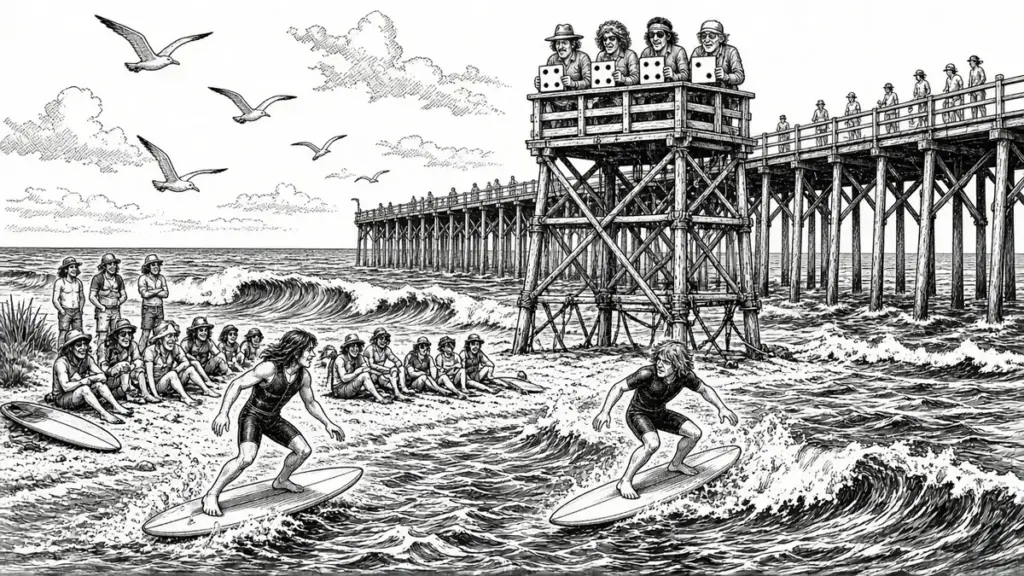
- Started 1977. Nancy Katin launched the Katin Pro-Am Team Challenge in April 1977. Teams of pros and amateurs surfed together, so local kids could compete in the same heats as their heroes.
- Cliffs, then pier. It began at the Huntington Cliffs and moved to the north side of the Huntington Beach Pier.
- Format. Early teams had six surfers; later editions used four-surfer teams. An individual champion and a team champion were crowned each year.
- Pier break. The contest ran every year through 1989. Demolition and rebuilding of the pier forced a break before it returned in April 1993.
- Two eras. The first run lasted into the late ’90s. Katin USA revived it for 2009, 2010 and 2011.
Individual champions we could confirm
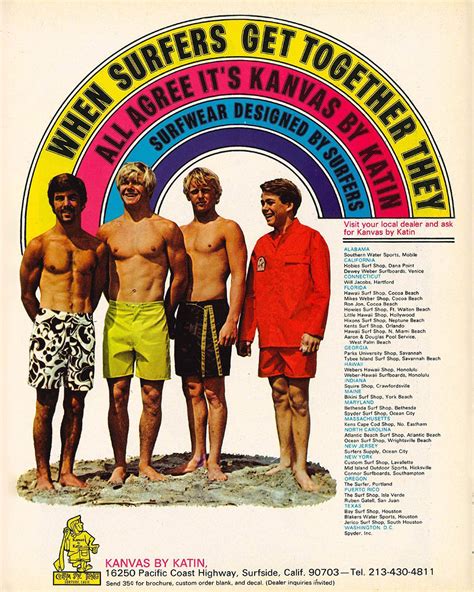
- 1977: Shaun Tomson
- 1978: Larry Bertlemann
- 1979: Greg Mungall
- 1980: Michael Ho
- 1981: Shaun Tomson
- 1982: Tom Curren
- 1983: Martin Potter
- 1984: Joey Buran
- 1985: Willy Morris
- 1986: Martin Potter
- 1987: Tom Curren
- 1988: Dave Parmenter
- 1989: Richie Collins
- 1994: Kelly Slater (his team, Focus, took the team title too)
- 1997: Sunny Garcia (that year on the south side of the pier)
- 2009: Brett Simpson (Team Hurley won)
- 2010: Chris Waring (Team Reef won)
- 2011: Timmy Curran (Team Hurley won)
Champions for 1993, 1995, 1996 and 1998 weren’t confirmed in the sources we checked, so they’re left out rather than guessed.
Stories you probably haven’t heard
The trunks that could stand up by themselves
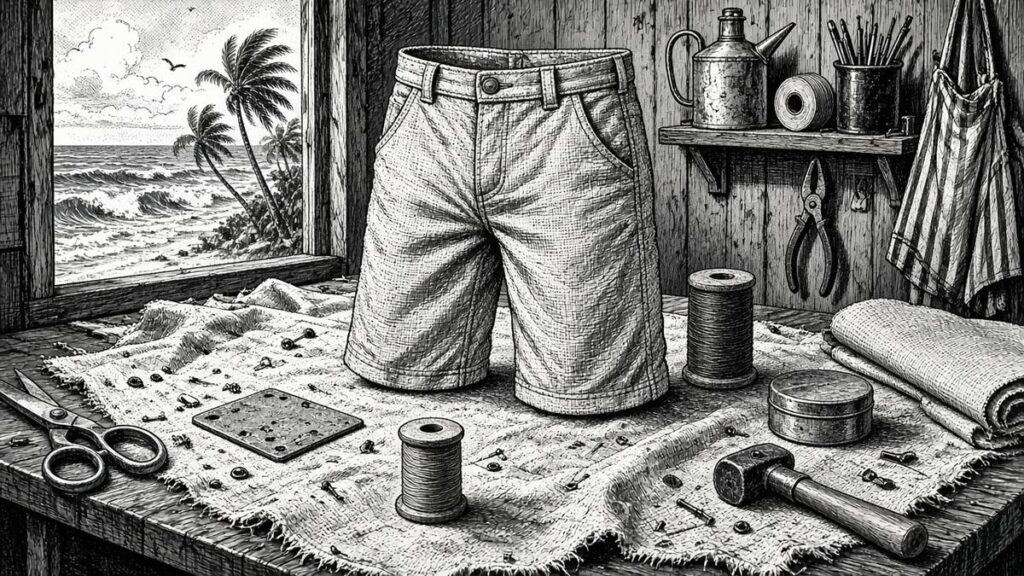
By Corky Carroll’s own account, he sketched the design he wanted on a piece of brown packing paper. Nancy measured him, and a week later he had a pair of red canvas surf trunks. They worked, almost too well. The canvas was so stiff the trunks could stand up on their own, and so rough they gave him what he called a world-class rash. He asked for the same design in a lighter fabric, and Walter ordered some. Carroll says the Katins promised him free trunks for life for getting them into the surfwear business.
There was no Bill Katin
For years people asked whatever happened to “Bill Katin,” the surfer on the logo. There wasn’t one. By Carroll’s account, the man behind the business was Walter, and the blond, bushy-haired surfer the logo was drawn from was a Surfside local named Bill Perry. That story comes from Carroll alone, so take it as the local legend it is.
“I begged Nancy not to leave it to me”
When Nancy told Sato she wanted to give her the shop, Sato said no. More than once. In interviews she said her English wasn’t good enough and that she wasn’t a businesswoman. Nancy left it to her anyway, and Sato said she was shocked. She brought in Glenn, then a truck driver, at a pay cut. Sales grew about 25 percent his first year. Sato kept sewing well past retirement age. When Glenn made her cut back to five days a week, she threatened to fire him, she told the LA Times with a grin.

Towel on, trunks off
Back when the seam guarantee was a local ritual, a surfer with a blown seam would walk across the sand to the shop on PCH, wrap up in a towel, peel off the trunks and wait while a seamstress stitched them back together. Sato was making as many as 20 pairs of trunks a day at her peak. One local estimate puts her lifetime total at more than 300,000 pairs. She retired during the pandemic at 91 and died in October 2024 at 96.
Who owns the name
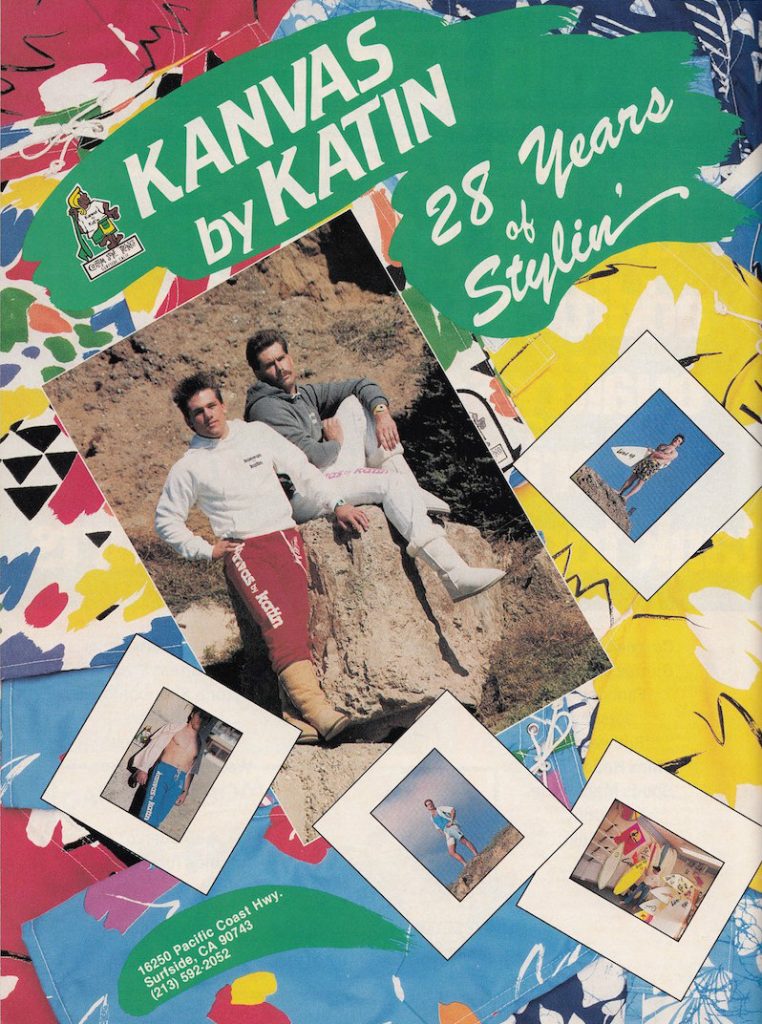
- Licensing. Bill Sharp, a former Surfing magazine editor, and Rick Lohr became the Katin brand’s licensees. The LA Times dated that to 1981 in one story. Another LA Times story said the Hugheses’ wholesale deal with Lohr, Sharp and Mike Snyder of the snowboard-apparel line Burning Snow came in 1990. Either way, the wholesale side became Katin USA.
- Modernizing. Around 1990 the trunks went into mass production. Nylon replaced canvas, Velcro replaced the snap fly, and the logo was simplified to a single K. Sato kept the final say on production.
- K2, 1997. The ski company K2 Inc. bought Katin USA in October 1997. The Surfside shop, under separate ownership, wasn’t part of the deal.
- Today. According to a 2022 trade report, Katin President Mac Beu owns the brand with the Hughes family. His family’s company, OceanAire Sportswear, helps run operations, and the brand sells through about 500 stores worldwide. The original shop is still on PCH in Surfside.
- A note for shoppers. We couldn’t verify that any current Katin products are made in the USA, so we’re not saying they are.
Katin Corner
Hear it from the people who lived it. Every video here is an official upload from the channel that made it. No bootlegs, no rips.
Sources
- Katin USA, “Our Story”: https://katinusa.com/pages/our-story
- Katin USA, “The Katin Story”: https://katinusa.com/pages/the-katin-story
- Katin USA journal, “Remembering Sato Hughes” (2024): https://katinusa.com/blogs/journal/remembering-sato-hughes-katins-first-seamstress
- Los Angeles Times, “Above Board” (1994): https://www.latimes.com/archives/la-xpm-1994-06-16-ls-4853-story.html
- Los Angeles Times, “Ski Maker K2 Buys Sportswear Brands Katin, Planet Earth” (1997): https://www.latimes.com/archives/la-xpm-1997-oct-25-fi-46384-story.html
- Los Angeles Times, “Katin Team Challenge Surfing Returns This Weekend” (1993): https://www.latimes.com/archives/la-xpm-1993-04-07-sp-20175-story.html
- Los Angeles Times, “Slater Wins Katin Team Challenge” (1994): https://www.latimes.com/archives/la-xpm-1994-05-09-sp-55531-story.html
- Los Angeles Times, “Student Out-Surfs Teacher as Garcia Wins” (1997): https://www.latimes.com/archives/la-xpm-1997-jul-28-sp-17023-story.html
- Daily Pilot, “Katin’s return a success” (2009): https://www.latimes.com/socal/daily-pilot/news/tn-dpt-xpm-2009-01-29-hbi-spsurfing012909-story.html
- Daily Pilot, “Waring leads team to victory” (2010): https://www.latimes.com/socal/daily-pilot/news/tn-dpt-xpm-2010-01-15-doc4b5112318e645758992358-story.html
- Daily Pilot, “Wet ‘N’ Wild with Rockin’ Fig” (2010): https://www.latimes.com/socal/daily-pilot/news/tn-dpt-xpm-2010-01-07-hbi-fig01072010-story.html
- Surfer, “Timmy Curran Wins Katin Pro-Am Team Challenge for Hurley” (2011): https://www.surfer.com/news/timmy-curran-wins-katin-pro-am-team-challenge-for-hurley
- Corky Carroll, “Don’t go looking for Bill Katin,” Orange County Register (2007): https://www.ocregister.com/2007/10/11/corky-carroll-dont-go-looking-for-bill-katin/
- Encyclopedia of Surfing, “Kanvas by Katin: When Surf Trunks Literally Stood Up for Themselves”: https://www.eos.surf/feature/kanvas-by-katin-when-surf-trunks-stood-up-for-themselves
- Encyclopedia of Surfing, “Katin Pro-Am Team Challenge”: https://www.eos.surf/encyclopedia/katin-pro-am-team-challenge-2
- Huntington Beach Surfing Walk of Fame, Nancy Katin: https://surfingwalkoffame.com/nancy-katin/
- Huntington Beach Surfing Walk of Fame, Hole in the Wall Gang: https://surfingwalkoffame.com/hole-in-the-wall-gang/
- Orange Coast, “Sato Hughes: The Godmother of the International Surfwear Industry” (2018): https://orangecoast.com/2018/sato-hughes-kanvas-katin/
- Sun News, “Seal Beach matriarch helped put KbK on surf map”: https://www.sunnews.org/seal-beach-matriarch-helped-put-kbk-on-surf-map/
- Surf Expo, “Checking in with Katin” (2022): https://surfexpo.com/news/19961/987499662/
- Shop Eat Surf, “Katin Plays the Long Game to Double-Digit Growth”: https://shop-eat-surf-outdoor.com/news/katin-plays-the-long-game-to-double-digit-growth/532310/
- GQ, “Dropping Knowledge: Katin Shorts”: https://www.gq.com/story/dropping-knowledge-katin-shorts
Photos: Karen Fasimpaur via Wikimedia Commons (CC BY 2.0); Infophoto via Wikimedia Commons (CC BY-SA 4.0); Carol M. Highsmith, Library of Congress (public domain). Photos are resized only, not cropped or edited. Illustrations are original artwork by Gidget for Surfing Fukcs, with invented characters, not likenesses of real people. We don’t use Katin logos or product photos, and no photo of the Katins or the Hugheses appears because we couldn’t find one that is openly licensed.