
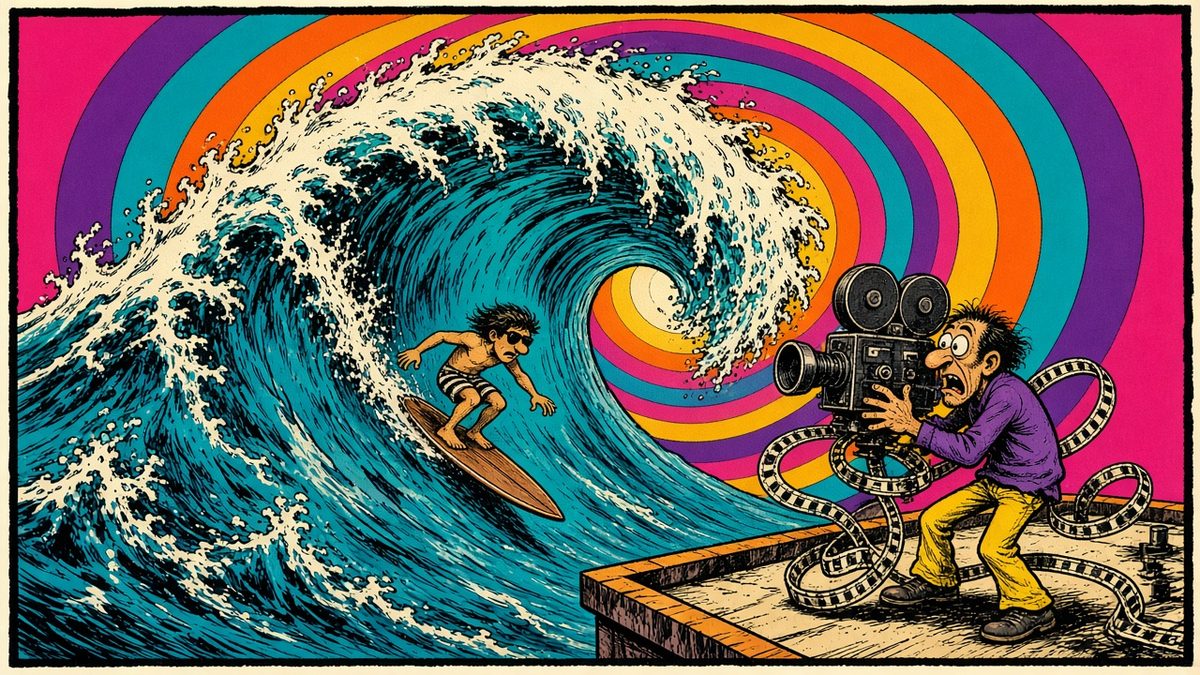
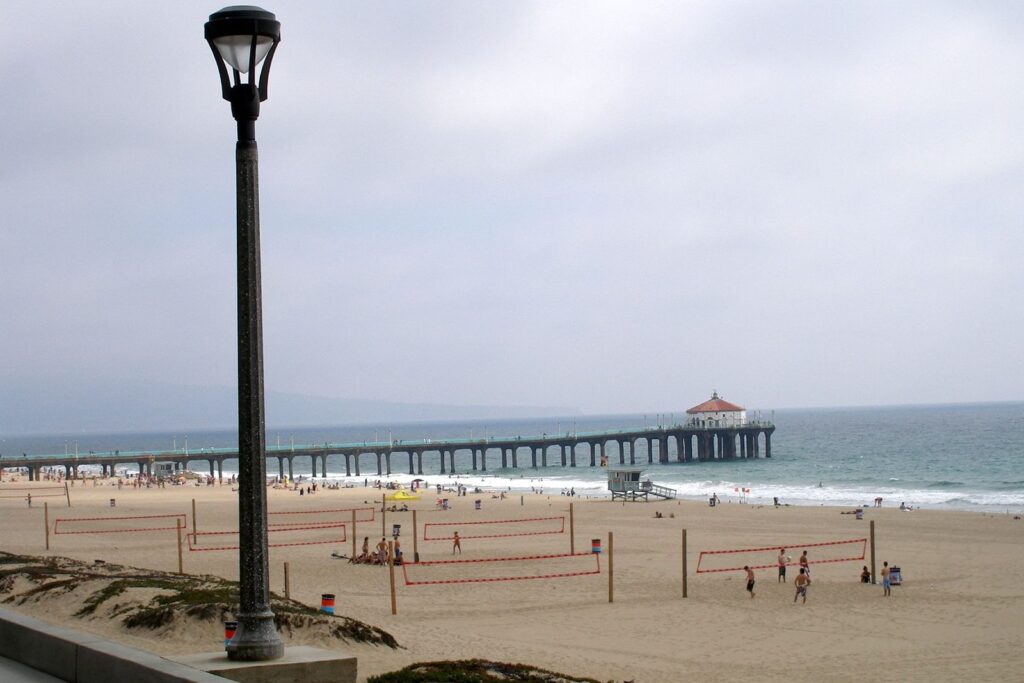
Before jet skis, before leashes, before anybody called it big-wave surfing, there was a kid cutting bait on the Manhattan Beach Pier and watching the older guys surf under it. His name was Greg Noll. He grew into a 6’2″ slab of South Bay beef in black-and-white convict trunks, and he spent about fifteen winters asking the Pacific for a wave he couldn’t ride. In December 1969 it answered.
The facts, no wax on top
- South Bay born and raised (almost). Born Greg Lawhead in San Diego on Feb. 11, 1937, he moved to Manhattan Beach as a little kid (at 3 or at 6, depending on who you ask) and took his stepdad Ash Noll’s last name.
- Pier rat. He fished and cut bait on the Manhattan Beach Pier and hung around the surf club under it, where Dale Velzy was shaping balsa boards.
- Garage brand. According to the family’s board company, he was building boards under the Noll name in his parents’ Manhattan Beach garage by 1951.
- Lunada Bay before Hawaii. Per the family’s account, he learned big surf at Palos Verdes’ Lunada Bay, just over the hill from Torrance.
- School? Sort of. At 17 he moved to Oahu, lived in a Quonset hut at Makaha and finished high school at Waipahu High. As he put it in his autobiography: “School came second… or third.”
- Exporting the stoke, 1956. He was on the US lifeguard team that went to Australia during the Melbourne Olympics, for a surf carnival held alongside the Games, not as part of them. They brought light balsa “Malibu” boards to a country still riding 16-foot “toothpicks.”
- Waimea, Nov. 7, 1957. Nobody had surfed the bay since Dickie Cross drowned there in 1943. Noll led the crew that broke that spell.
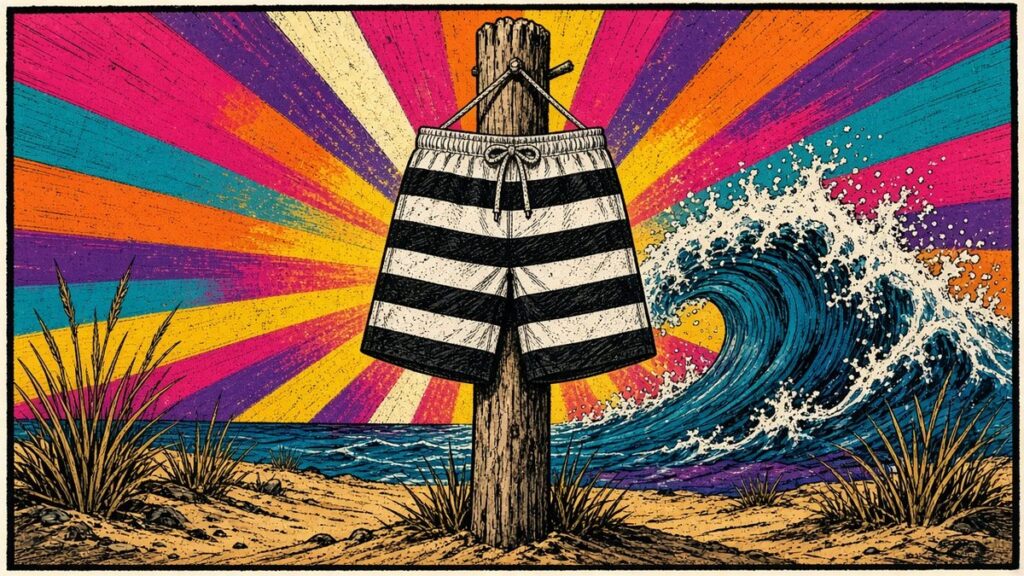
- Jailhouse trunks. Black-and-white prison stripes became his trademark on giant days.
- Factory boss. In 1965 he opened a 20,000-square-foot board factory in Hermosa Beach, then the biggest in the world. It turned out roughly 175 to 200 boards a week, and about half of them went to East Coast surfers.
- Da Cat. He teamed up with his old Malibu pal Miki Dora on the “Da Cat” model and its infamous ads.
- Hollywood stunt. He did the Waimea riding for James Mitchum’s character in Ride the Wild Surf (1964).
- Indie filmmaker. From about 1957 to 1961 he shot his own Search for Surf movies (four or five, depending on the count) and toured them himself.
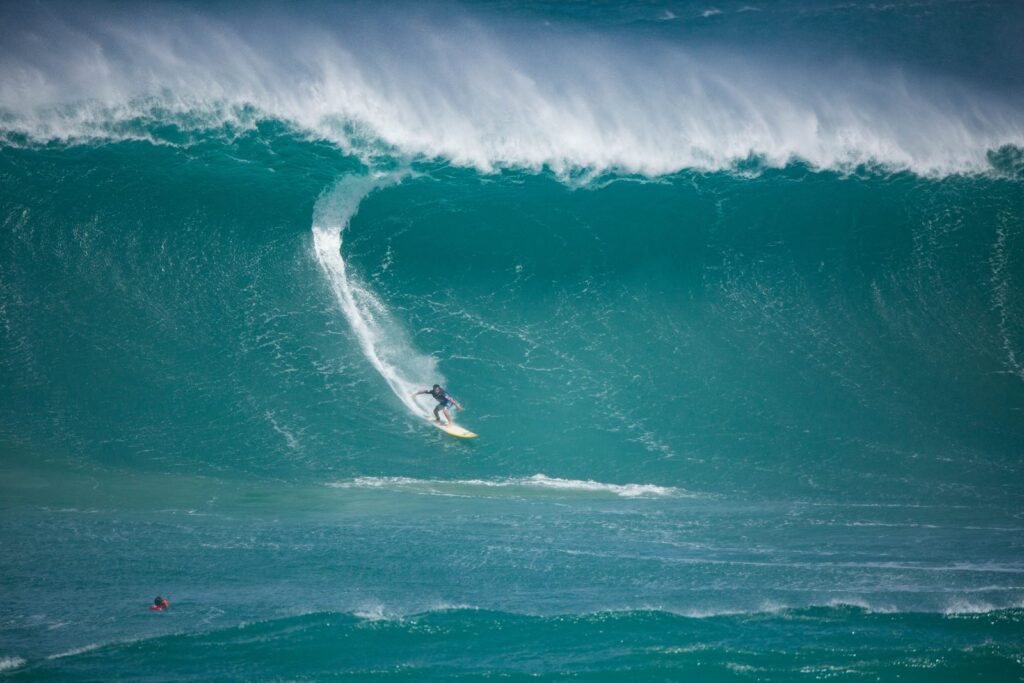
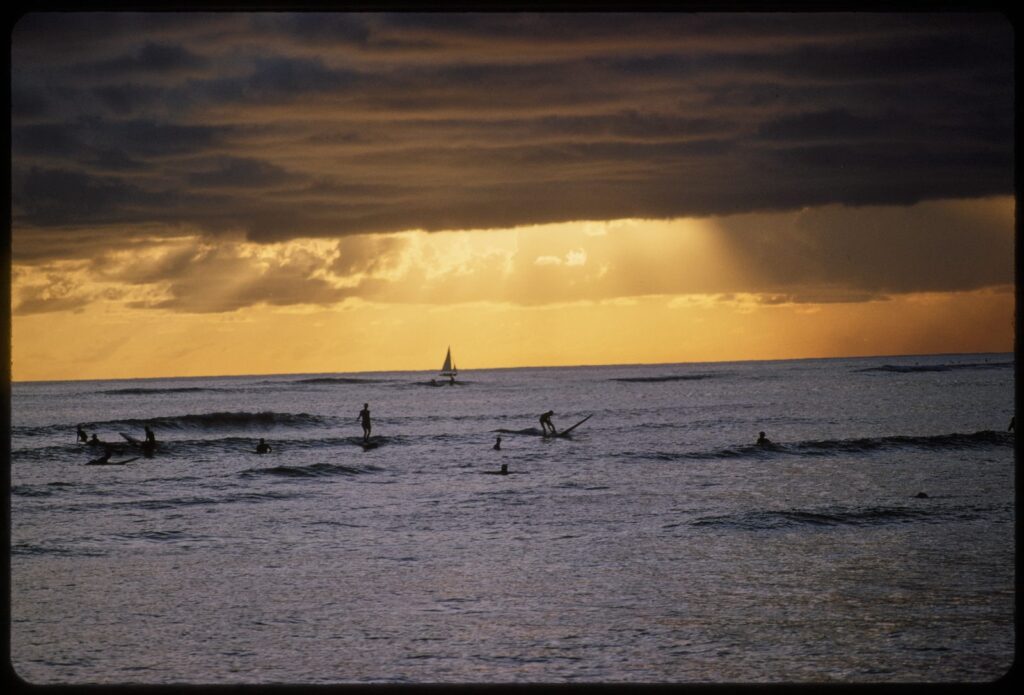
- The Makaha wave. On Dec. 4, 1969, during the “Swell of the Century,” he dropped into the wave that made him a legend.
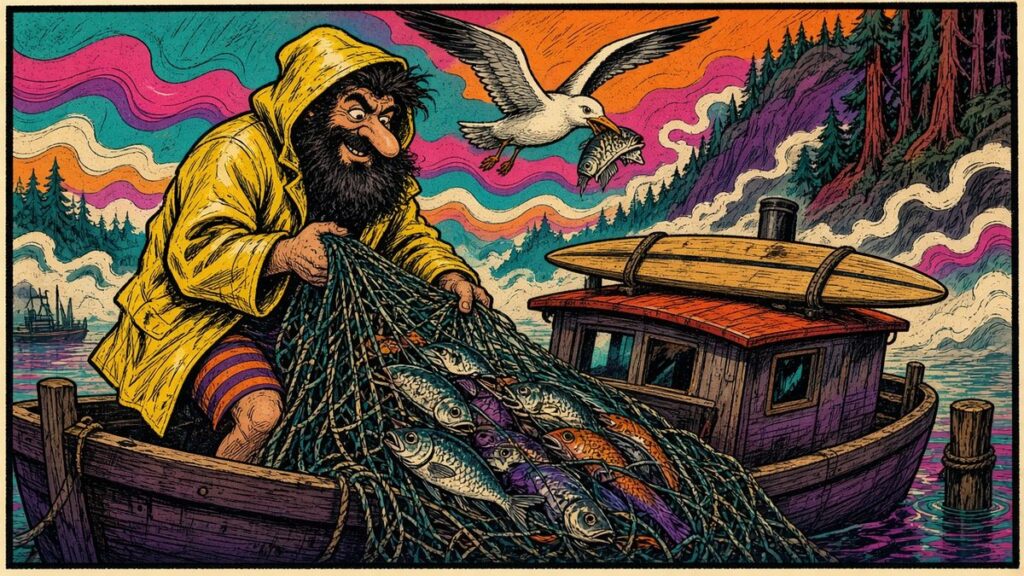
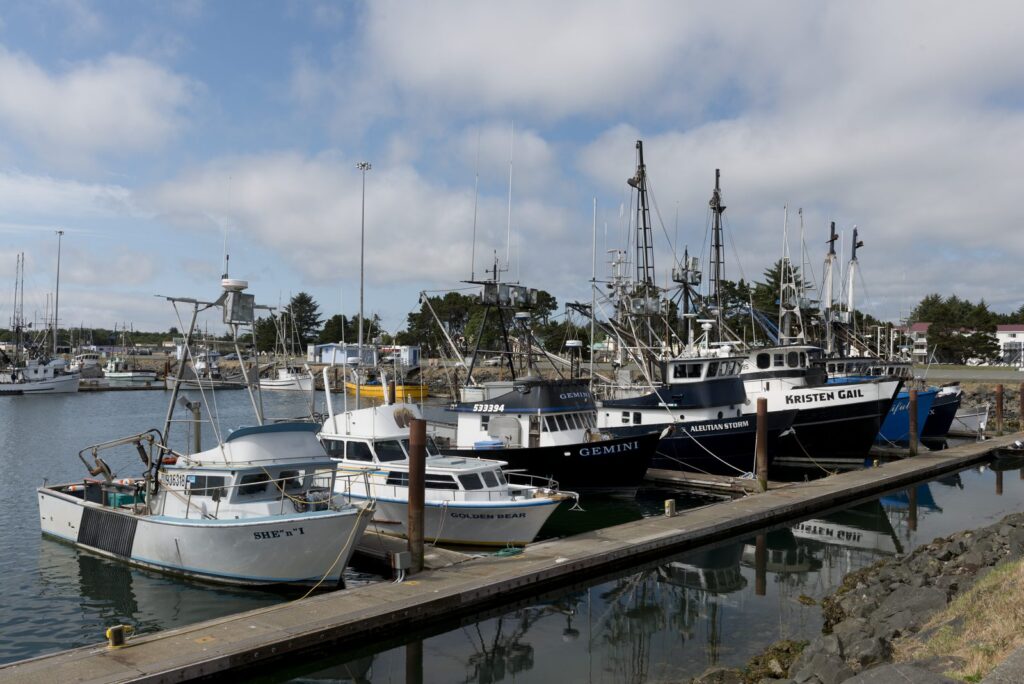
- Then he walked. He closed the factory in 1971, moved north and fished commercially out of Crescent City for years.
- Hall of fame times three. He was inducted into the Huntington Beach Surfing Walk of Fame (1996), the first class of Hermosa’s Surfers Walk of Fame (2003) and the Surfers’ Hall of Fame (2006).
- Paddled in for good. He died of natural causes in Crescent City on June 28, 2021, at 84.
Stories you probably haven’t heard
He wasn’t technically first at Waimea, and he still owns it. That November morning in 1957, a quiet Seal Beach lifeguard named Harry Schurch had already caught a few waves alone. Then Noll showed up with a crew and turned it into a movement. By the family’s account, the crew included Pat Curren, Mickey Muñoz and Mike Stange. Head counts run from “four or five” to “a dozen or so.” As Stange later told it, nobody “would even have thought of it except for Greg.”
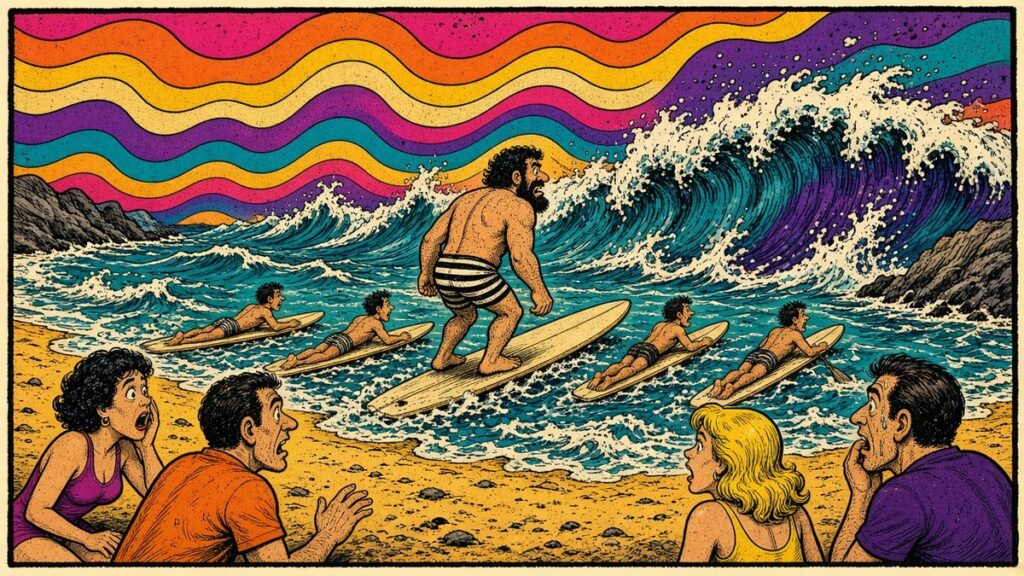
The trunks were (maybe) a joke. Per the family, he had a Waianae tailor stitch up the prison stripes “sort of as a joke.” He also told a reporter he wore them so people would know it was him on the wave and get out of the way. Both sound like him.
He blew Australia’s mind, then sold them the evidence. In 1956 the Aussies watched visiting Americans turn and trim on short balsa boards, something their 16-foot planks couldn’t do. Within weeks Sydney shapers were copying the boards, and Bob Evans bought a 10-foot gun straight from Noll. Noll’s own verdict: “we hit ’em like a comet.” Fair warning: Aussie surf historians argue the real first demo was at Avalon in Sydney, not at Torquay, where Noll’s memory puts it.
The biggest wave nobody filmed. How big was Makaha? The local paper the next morning called them “massive 25-foot waves.” Most of the surf world says 35. Noll guessed 35 to 40, the retellings pushed it to 50 and 60, and some skeptics say 20. Shaun Tomson filmed from a rooftop on Super 8, then “lost” the reel. When Stacy Peralta went through Tomson’s footage for Riding Giants, the film cut to white right before the wave. Tomson’s line: “That wave has grown about 6 inches a year.”
He traded big waves for steelhead. After Makaha, by his own account, he and his wife Laura drove an old Metro all the way to Alaska looking for a place to land, and they ended up in Crescent City on the Smith River. Per the family, they named their son Jed after the mountain man Jedediah Smith. Jed now runs Noll Surfboards in San Clemente.
Last call
Noll once told a reporter that people call surfing a sport, “but it’s not. It’s a lifestyle.” His took him from a South Bay pier to the North Shore, to Australia and back. He helped make surfing a world thing, and he made it look American as hell doing it. Not bad for a gremmie.
Da Bull Corner
Hear it from the man himself. Every video here is an official upload from the channel that made it. No bootlegs, no rips.
Sources
- Los Angeles Times obituary (2021): https://www.latimes.com/obituaries/story/2021-06-29/greg-noll-south-bay-surfer-legendary-big-wave-rider-dies
- Los Angeles Times, “How big was it?” (2004): https://www.latimes.com/archives/la-xpm-2004-jan-13-os-giants13-story.html
- AP obituary via Honolulu Star-Advertiser (2021): https://www.staradvertiser.com/2021/06/28/breaking-news/legendary-big-wave-surfer-greg-da-bull-noll-dies-at-84/
- New York Times obituary (2021): https://www.nytimes.com/2021/06/30/sports/greg-noll-dead.html
- Washington Post obituary (2021): https://www.washingtonpost.com/local/obituaries/greg-noll-dead/2021/06/29/624c048a-d8e3-11eb-9bbb-37c30dcf9363_story.html
- Honolulu Star-Bulletin, “Storm Wave Wipes Out Champ Surfer” (Dec. 5, 1969), via Encyclopedia of Surfing: https://www.eos.surf/feature/storm-wave-wipes-out-champ-surfer-honolulu-star-bulletin-december-5-1969
- Encyclopedia of Surfing, “Noll, Greg”: https://www.eos.surf/encyclopedia/noll-greg
- Noll Surfboards, Greg Noll bio (archived 2012): https://web.archive.org/web/20120525182954/http://www.nollsurfboards.com/gregnoll.html
- Noll Surfboards: https://nollsurfboards.com/
- Daily Breeze obituary (2021): https://www.dailybreeze.com/2021/06/28/south-bay-surfing-icon-big-wave-charger-greg-noll-dies-at-age-84/
- South Bay History, Sam Gnerre (2016): https://sbhistoryblog.wordpress.com/2016/08/20/greg-nolls-legendary-surfing-exploits-began-in-the-south-bay/
- California Surf Museum, “The Legendary Greg Noll”: https://surfmuseum.org/archive-exhibit/the-legendary-greg-noll/
- Huntington Beach Surfing Walk of Fame: https://surfingwalkoffame.com/greg-noll/
- Honolulu Star-Bulletin (1996): https://archives.starbulletin.com/1996/08/06/sports/story2.html
- East Coast Surfing Hall of Fame: https://eastcoastsurfinghalloffame.org/portfolio-items/greg-noll/
- International Surfboard Builders Hall of Fame: https://www.isbhof.com/Pages/ISBHOF_InducteeDetails.php?Inductee_Id=142
- World Surf League obituary (2021): https://www.worldsurfleague.com/posts/478105/surfing-pioneer-and-big-wave-icon-greg-da-bull-noll-passes-away-at-84
- Australian National Maritime Museum, Greg Noll 1956 demonstration paddleboard: https://collections.sea.museum/en/objects/179919/greg-noll-1956-demonstration-paddleboard
- surfresearch.com.au, 1956: https://surfresearch.com.au/1956.html
- The Inertia, “The Photo That Does Not Exist”: https://www.theinertia.com/surf/greg-noll-legendary-big-wave-makaha-photo-exist/
- The Inertia obituary (2021): https://www.theinertia.com/surf/greg-noll-big-wave-legend-and-surfing-icon-has-passed-away/
- SurferToday (Harry Schurch / Matt Warshaw quote): https://www.surfertoday.com/surfing/greg-noll-the-fearless-big-wave-surfing-pioneer
- Da Bull: Life Over the Edge, Greg Noll & Andrea Gabbard (North Atlantic Books, 1989), quoted via the WSL and East Coast Surfing Hall of Fame pages above
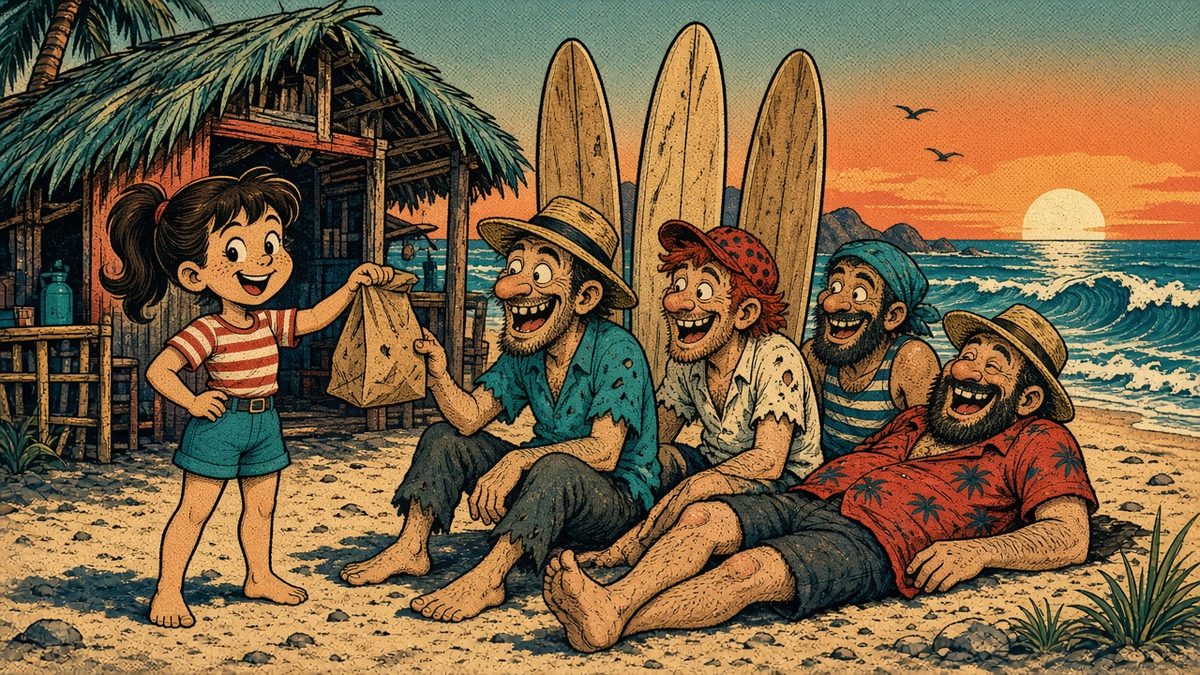
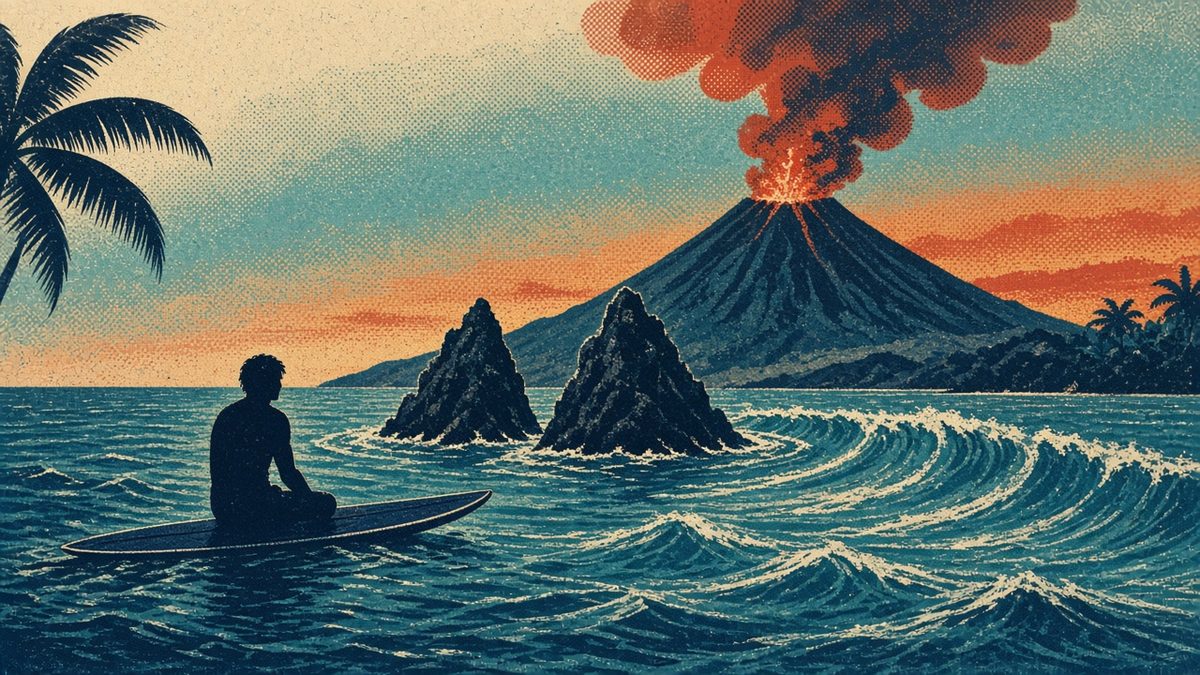
Photos: Paul Hamilton via Wikimedia Commons (CC BY-SA 2.0); Toni Frissell, Library of Congress (no known restrictions); Anthony Quintano via Wikimedia Commons (CC BY 2.0); Carol M. Highsmith, Library of Congress (public domain). Photos are resized only, not cropped or edited. Illustrations are original Surfing Fukcs artwork with invented characters, not likenesses of real people. No photo of Greg Noll himself is used because we couldn’t find one that is openly licensed.
.jpg)
.jpg)